By Paula Melton, CPA
Melton Bookkeeping & Accounting Services
Introduction
Most business owners don’t wake up in the morning thinking, “Today might be the day someone steals from my company.”
In fact, most fraud doesn’t happen because business owners are careless.
It happens because they trust the people around them.
And while trust is an important part of running any business, trust alone is not an internal control.
During my years in public accounting, I saw firsthand how even well-managed businesses can become victims of fraud. One case, in particular, has stayed with me throughout my career.
It began with something that seemed relatively minor.
Our firm repeatedly requested copies of a client’s monthly bank reconciliation reports.
Each time we asked, we were told the reconciliations had been completed manually and that there wasn’t a report available from QuickBooks.
Something about that explanation never sat right with me.
A completed bank reconciliation should always leave a trail of documentation showing exactly how the bank balance was reconciled to the accounting records.
At the time, management trusted the employee responsible for the bookkeeping, so the issue wasn’t pursued further.
Several months later, everything changed.
The bookkeeper was terminated after concerns arose about possible theft, and our firm was asked to perform a detailed review of the accounting records.
I spent days obtaining three years of bank statements and rebuilding every bank reconciliation from scratch.
As I compared the accounting records to the cancelled checks from the bank, a disturbing pattern emerged.
Checks recorded in QuickBooks as payments to legitimate vendors had actually been written to completely different individuals.
Some were payable directly to the former bookkeeper.
Others had been written to family members.
Some were used to pay personal debts.
Because no one independently reviewed the bank reconciliations or compared the cancelled checks to the accounting records, the scheme continued for years before it was discovered.
The losses exceeded $100,000.
That experience reinforced something I still tell every client today:
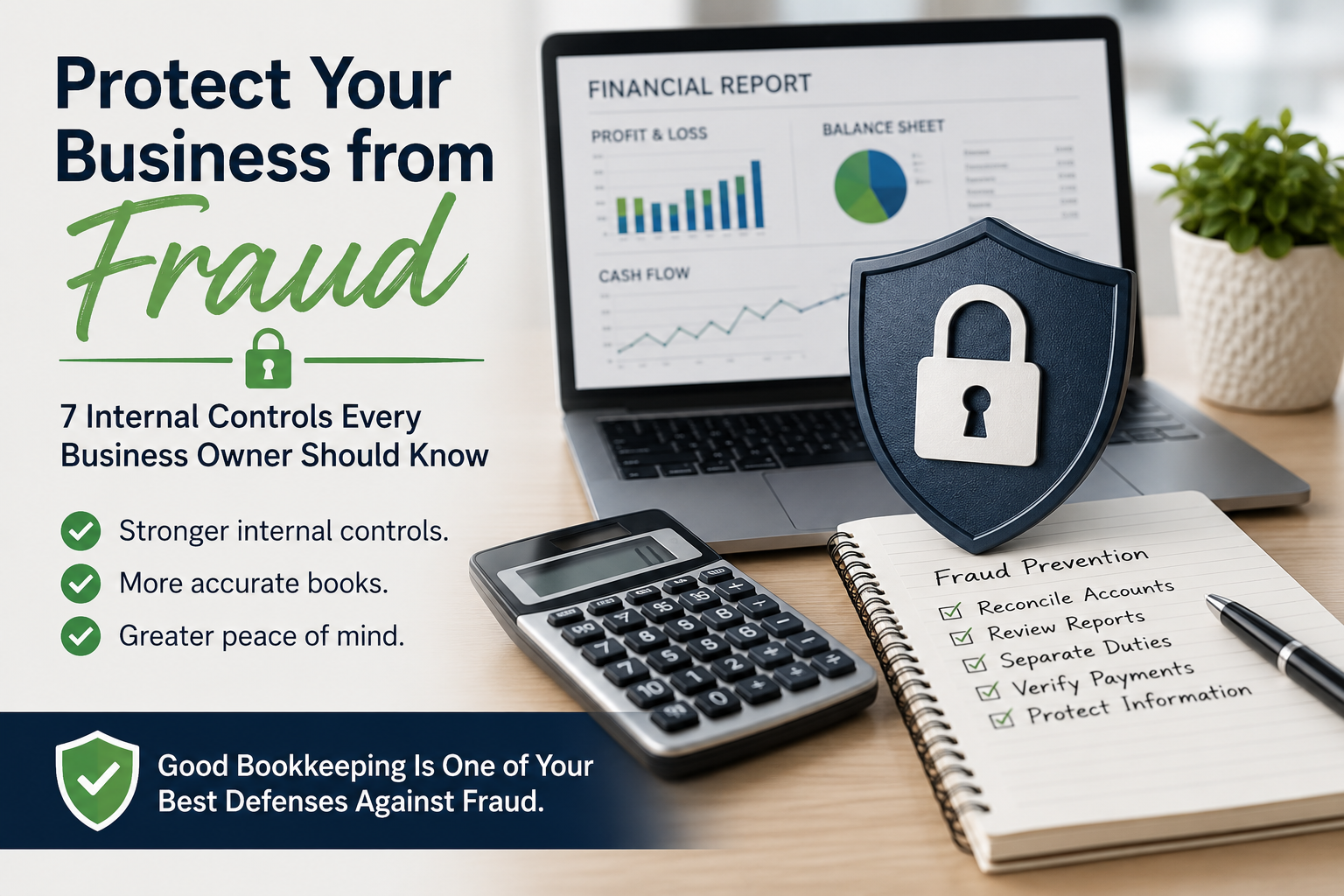
Good bookkeeping isn’t just about producing financial statements for tax season. It’s one of the strongest fraud prevention tools your business has.
Whether your business has two employees or two hundred, implementing a few simple internal controls can dramatically reduce the opportunity for fraud.
Why Small Businesses Are More Vulnerable
Many people assume fraud only happens in large corporations.
The truth is that small businesses are often easier targets because they typically have:
- Fewer employees
- Limited oversight
- One person handling multiple financial responsibilities
- Informal procedures
- A high level of trust among employees and family members
Fraud doesn’t always begin with a large theft.
It often starts with a small amount that goes unnoticed.
When no one catches it, the amount gradually increases.
The longer it continues, the larger the loss becomes.
Fortunately, many fraud schemes can be prevented—or detected much earlier—through good bookkeeping and strong internal controls.
1. Reconcile Every Bank and Credit Card Account Every Month
(Expanded section from our earlier discussion, including why reconciliations matter, what documentation should exist, why reconciliations should never be “manual” without support, what to review, outstanding checks, deposits in transit, comparing cancelled checks, etc.)
2. Review All Three Financial Statements—Together
(Expanded section discussing the Profit & Loss Statement, Balance Sheet, Statement of Cash Flows, ratios, trends, red flags, comparisons, and examples.)
3. Separate Financial Responsibilities
(Expanded segregation of duties section with examples for cash receipts, disbursements, payroll, credit cards, bank reconciliations, and small-business compensating controls.)
4. Verify Vendor and Banking Information
Discuss:
- ACH fraud
- Fake invoice scams
- Vendor email compromise
- Wire transfer fraud
- Calling vendors to verify banking changes
5. Protect Your Accounting System
Include:
- Multi-factor authentication
- Strong passwords
- User permissions
- Removing former employee access
- Regular software updates
- Securing QuickBooks administrator access
6. Review More Than Just Your Bank Balance
Explain:
Your bank balance tells you one thing.
Your financial statements tell you everything.
Discuss:
- Gross profit %
- Expense trends
- Duplicate payments
- Accounts receivable aging
- Accounts payable aging
- Payroll %
- Suspense accounts
- Uncategorized accounts
- Journal entries
- Owner distributions
7. Why Hiring an Outside Bookkeeper Can Reduce Fraud Risk
(Expanded version of the section we developed about independent oversight, monthly reviews, trend analysis, asking questions, fresh eyes, and early detection.)
Fraud Prevention Checklist
End with a practical checklist readers can save:
✔ Bank accounts reconciled monthly
✔ Credit cards reconciled monthly
✔ Financial statements reviewed monthly
✔ Cancelled checks periodically reviewed
✔ Bank reconciliation reviewed by someone other than the preparer
✔ Duties separated whenever possible
✔ Vendor banking changes independently verified
✔ Multi-factor authentication enabled
✔ Duplicate payments reviewed
✔ A/R and A/P aging reviewed
✔ Suspense and Uncategorized accounts investigated
✔ Outside bookkeeping review performed regularly
Final Thoughts
Fraud prevention isn’t about assuming the worst in people.
It’s about building systems that protect your business, your employees, and your future.
After more than two decades in public accounting, I’ve learned that the businesses that experience the fewest financial surprises aren’t necessarily the largest or the most profitable.
They’re the businesses that review their financial information consistently, ask questions when something doesn’t make sense, and put the right internal controls in place before they need them.
Good bookkeeping is about much more than keeping records.
It’s about protecting the business you’ve worked so hard to build.
If you’re unsure whether your bookkeeping processes include the internal controls your business needs, I’d be happy to help.
Frequently Asked Questions
What are internal controls?
Internal controls are the policies and procedures a business puts in place to safeguard its assets, ensure financial information is accurate, and reduce the risk of fraud and errors. Examples include reconciling bank accounts monthly, separating financial duties, requiring approval for purchases, and reviewing financial reports regularly.
Why is separating financial duties important?
Separating financial duties prevents one person from having complete control over a financial transaction from beginning to end. For example, the person who writes checks should not also reconcile the bank account, and the person who records customer payments should not also make bank deposits. These checks and balances make it much more difficult for fraud or errors to go undetected.
How often should bank accounts be reconciled?
Every business should reconcile its bank and credit card accounts at least once a month. Waiting several months to reconcile increases the likelihood that errors, duplicate transactions, unauthorized withdrawals, or fraudulent activity will go unnoticed.
Why should I review my financial statements every month?
Your Profit & Loss Statement, Balance Sheet, and Statement of Cash Flows each tell a different part of your business’s financial story. Reviewing these reports monthly can help you identify unusual trends, unexpected expenses, cash flow issues, bookkeeping errors, and potential fraud before they become larger problems.
What are some common warning signs of fraud?
Some common red flags include:
- Missing or delayed bank reconciliations
- Duplicate payments to vendors
- Unknown vendors appearing in your accounting system
- Unexplained increases in expenses
- Customers reporting payments that aren’t reflected on their accounts
- Checks written out of sequence
- Unusual journal entries
- Employees who are unwilling to take vacations or allow others to review their work
- Requests to change vendor payment information by email without verification
A single warning sign doesn’t necessarily indicate fraud, but it should prompt further review.
Can QuickBooks prevent fraud?
QuickBooks is a valuable accounting tool, but it cannot prevent fraud by itself. Fraud prevention depends on the internal controls your business has in place and the people using the software. Features such as user permissions, audit logs, bank reconciliations, and approval processes can help reduce risk when used properly.
Why should I hire an outside bookkeeper instead of handling everything myself?
An outside bookkeeper provides independent oversight of your financial records. Because they aren’t involved in your day-to-day operations, they’re often able to recognize unusual transactions, inconsistencies, and trends that may otherwise go unnoticed. Regular reviews also help ensure your books remain accurate, organized, and tax-ready throughout the year.
What if my business is too small to separate financial duties?
Many small businesses don’t have enough employees to fully separate every financial responsibility. In those situations, the business owner becomes an important part of the internal control process by reviewing bank statements, cancelled checks, financial reports, payroll reports, and bank reconciliations each month. An outside CPA or bookkeeper can also provide an additional level of oversight.
How can Melton Bookkeeping & Accounting Services help?
At Melton Bookkeeping & Accounting Services, we help small businesses throughout Marshfield, Springfield, and Southwest Missouri maintain accurate, organized, tax-ready financial records. Our monthly bookkeeping services include bank and credit card reconciliations, financial statement preparation, QuickBooks support, and ongoing financial reviews designed to help business owners identify problems early, strengthen internal controls, and make informed business decisions.
At Melton Bookkeeping & Accounting Services, we help business owners maintain accurate, organized, tax-ready books while providing the financial oversight needed to make informed decisions and reduce risk.
About the Author
Paula Melton, CPA is the owner of Melton Bookkeeping & Accounting Services, where she helps small business owners throughout Marshfield, Springfield, and Southwest Missouri keep their books accurate, organized, and tax-ready.
With more than 20 years of public accounting experience, Paula has worked with businesses across a wide range of industries, helping them improve bookkeeping processes, strengthen internal controls, prepare accurate financial statements, and identify issues before they become costly problems. As a Certified Public Accountant and QuickBooks ProAdvisor, she believes good bookkeeping is about more than recording transactions—it’s about providing reliable financial information that business owners can use to make confident decisions.
“Her mission is simple: to help business owners maintain books that are Accurate. Organized. Tax-Ready. so they can spend less time worrying about their finances and more time growing their business.”
To learn more about Paula’s bookkeeping and advisory services, visit www.meltonaccountingservices.com or schedule a consultation to discuss your business’s bookkeeping needs.