One of the most common questions business owners ask is: “How often should I review my financials?”
The short answer is—more often than you probably are. Regularly reviewing your financials isn’t just about staying organized; it’s a key part of strong bookkeeping and accounting practices that helps you make smarter decisions, catch problems early, and set your business up for growth.
Many business owners only look at their numbers at tax time. You’re busy running your business, serving your clients, and managing everything that comes with it. But once you start checking in more often, everything either becomes clearer—or you begin to see that something may be off with your numbers.
Let’s break it down into a practical, manageable approach.
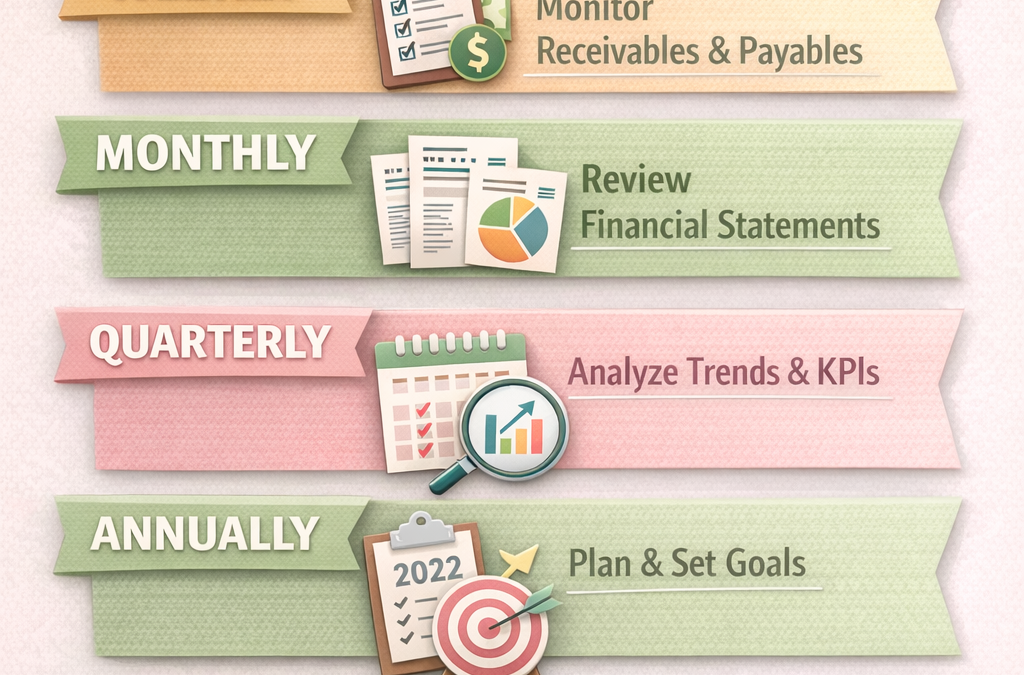
Daily: Monitor Cash Flow for Better Bookkeeping
You don’t need to dive into full financial reports every day, but you should have a general awareness of your cash position.
It can be as simple as:
- Looking at your bank balance
- Checking what came in and what went out
- Making sure nothing looks off
For example, if a large expense hits your account or a client payment is missing, you can catch it right away instead of weeks later.
Cash flow management is one of the most important parts of bookkeeping. Even profitable businesses can run into trouble if they don’t have enough cash on hand at the right time.
Weekly Bookkeeping Check-In: Stay in Control
A weekly check-in helps you stay proactive instead of reactive.
It’s about staying in control. A weekly review of your:
- Accounts receivable (who owes you money)
- Accounts payable (what you owe)
- Payroll activity
…is a core part of strong small business bookkeeping.
This helps you spot issues like late-paying customers, duplicate expenses, or unusual transactions before they snowball into bigger problems.
Monthly Financial Review: Essential Accounting Reports
Every business—no matter the size—should conduct a thorough monthly financial review. This is where things really start to come together.
This is where you truly understand how your business is performing:
- Are you profitable?
- Are expenses creeping up?
- Are you on track to meet your goals?
You should be reviewing key accounting reports, including:
- Profit & Loss Statement
- Balance Sheet
- Cash Flow Statement
- Budget vs. Actual Performance
👉 If you’re unfamiliar with these reports, here’s a simple breakdown from Investopedia:
https://www.investopedia.com/terms/f/financial-statements.asp
If you’re using accounting software like QuickBooks, this is also the time to make sure your books are accurate and up to date.
👉 Learn more about QuickBooks here:
https://quickbooks.intuit.com/
Regular monthly reviews can help prevent the need for major QuickBooks cleanup down the road.
Quarterly Financial Review for Business Growth
Think of this as your “big picture” review.
Quarterly reviews allow you to adjust your strategy. Maybe it’s time to cut costs, raise prices, or invest in growth.
During this review, focus on:
- Trends in revenue and expenses
- Profit margins
- Key performance indicators (KPIs)
- Tax estimates
Strong accounting practices at the quarterly level help ensure your business stays on track and avoids surprises.
Annual Accounting Review & Tax Planning
Your annual review ties everything together.
Look at:
- Year-end financial statements
- Overall profitability
- Business goals vs. actual results
- Tax planning opportunities
👉 For additional small business tax guidance, visit the IRS website:
https://www.irs.gov/businesses/small-businesses-self-employed
This is your opportunity to reflect on what worked, what didn’t, and how to plan for a stronger year ahead with better financial management and bookkeeping systems in place.
Why Regular Reviews Prevent QuickBooks Cleanup
One of the most common issues business owners face is messy or outdated books.
When your financial records aren’t reviewed regularly, small errors can build up over time—leading to inaccurate reports, confusion, and the need for time-consuming QuickBooks cleanup.
By reviewing your numbers consistently:
- You catch mistakes early
- Your bookkeeping stays accurate
- Your reports remain reliable
- You avoid costly cleanups later
Staying on top of your books now saves you time, stress, and money in the future.
The Bottom Line
If you only look at your numbers once a year at tax time, you’re running your business blind. It’s like trying to drive your car while only looking at the dashboard after you’ve already reached your destination.
Regular bookkeeping and financial reviews help you:
- Make adjustments in real time
- Improve cash flow
- Plan ahead
- Make better business decisions
Consistent financial reviews give you clarity, confidence, and control.
At a minimum, aim for:
- Weekly check-ins
- Monthly deep dives
- Quarterly strategy reviews
Final Thought
Your numbers tell a story—about your growth, your challenges, and your opportunities. The more often you read that story, the better decisions you’ll make.
If you’re not sure what to look for or your books are behind, working with a professional can make all the difference.
👉 We specialize in bookkeeping, accounting, and QuickBooks cleanup services to help business owners get accurate, organized financials and peace of mind.
FAQ
How often should I review my bookkeeping?
At a minimum, weekly and monthly reviews are recommended to keep your financial records accurate and up to date.
What is QuickBooks cleanup?
QuickBooks cleanup involves correcting errors, organizing transactions, and ensuring your financial reports are accurate and reliable.
Why is reviewing financial reports important?
Regular financial reviews help you manage cash flow, identify problems early, and make informed business decisions.
Regular reviews help you manage cash flow, identify issues early, and make better business decisions.